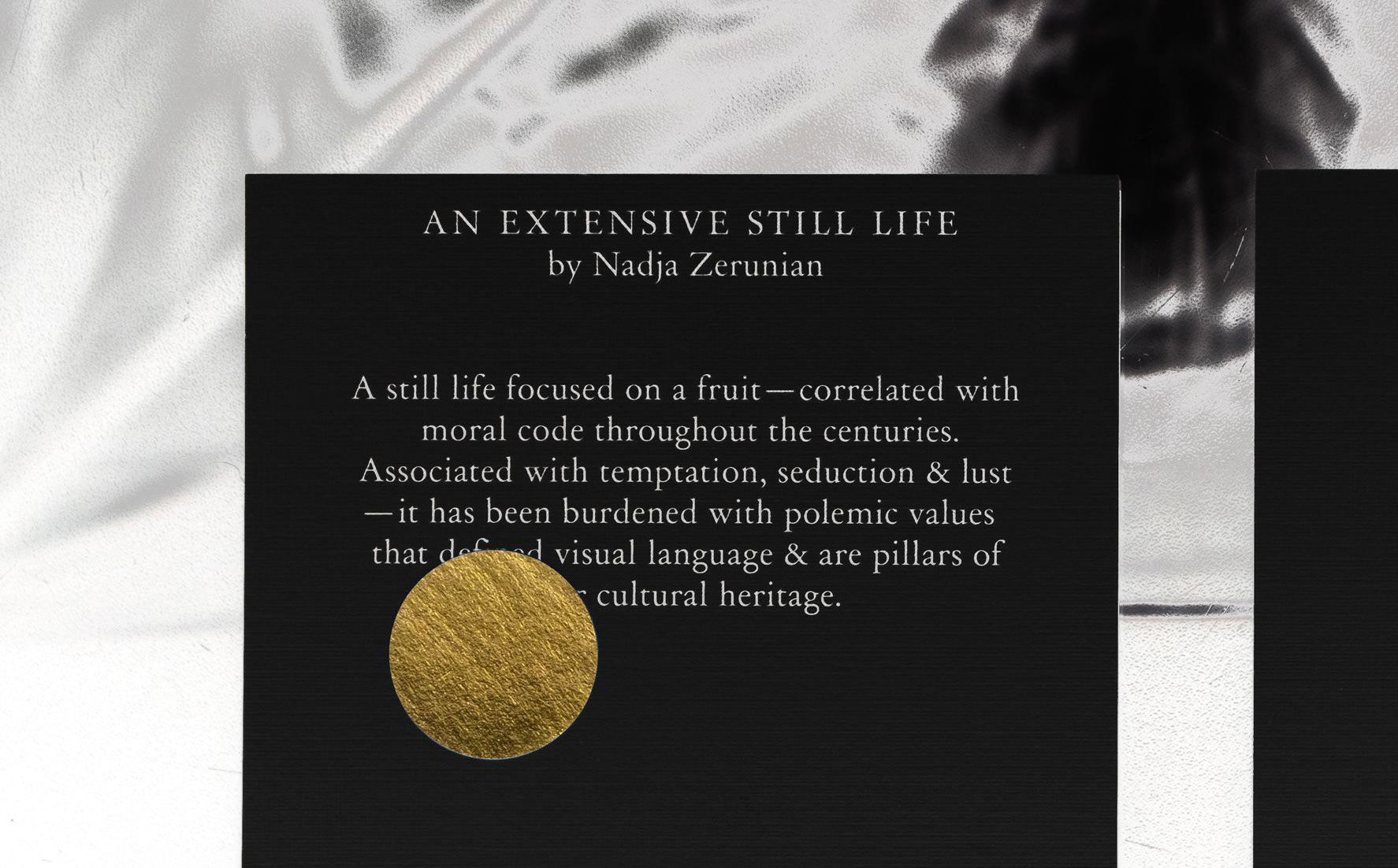
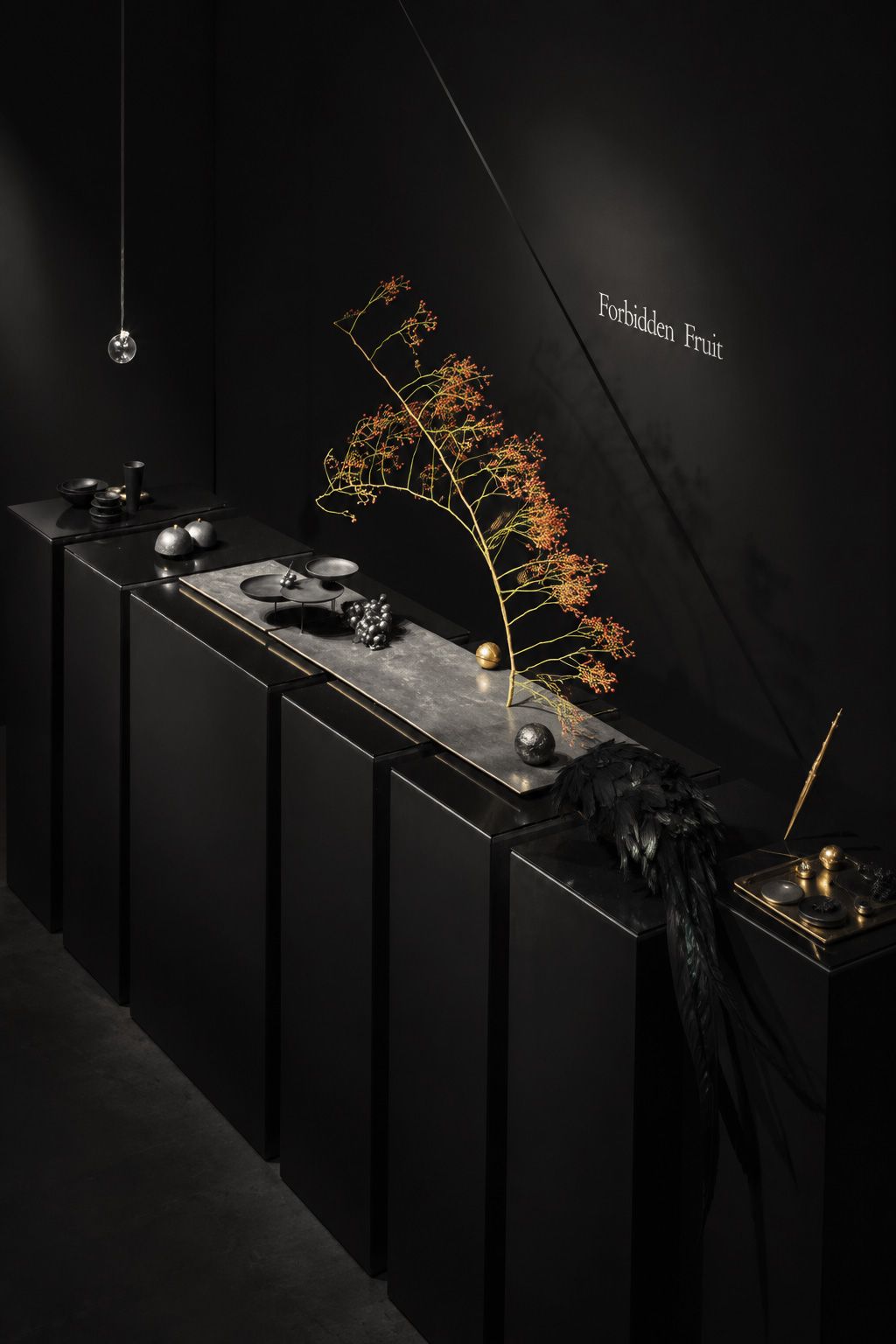
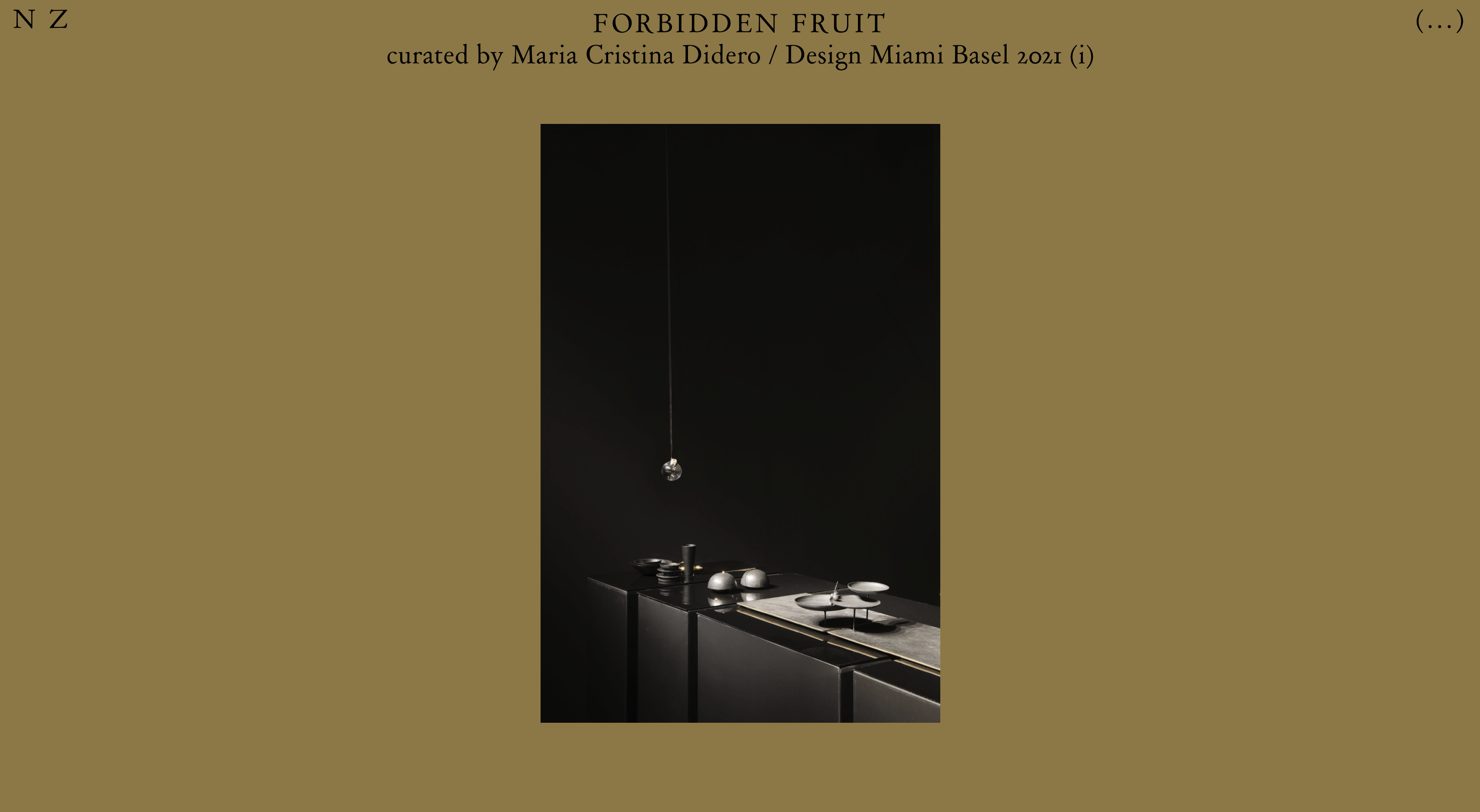
Forbidden Fruit, an exhibition by artist Nadja Zerunian, curated by Maria Cristina Didero for Design Miami/Basel 2021, explores fruit as an object charged with centuries of moral, cultural and symbolic meaning. Associated with temptation, seduction, lust and the thirst for knowledge, fruit becomes a vessel for stories of desire, guilt and condemnation. From religious narratives to classical still-life painting, it has repeatedly been used to represent innocence and transgression, abundance and decay, pleasure and consequence.
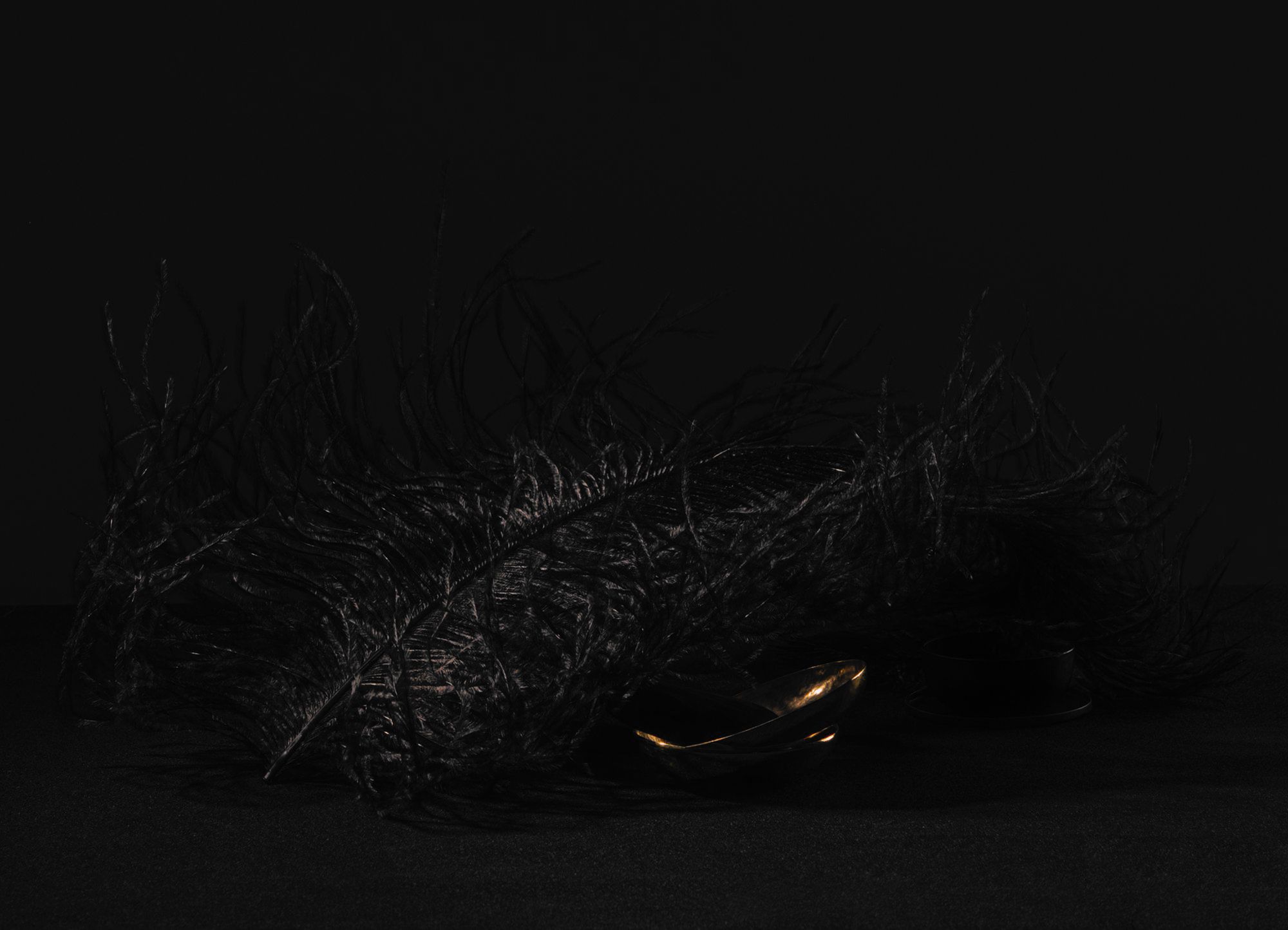
Zerunian’s objects revisit these established associations and open them to new interpretations. Familiar forms create an intense universe—frozen in time, yet appearing to wait for a story to continue. Removed from their everyday context, the objects become protagonists within a suspended narrative. They question inherited assumptions and reveal how deeply moral codes and cultural prejudices are embedded in the visual language surrounding us.
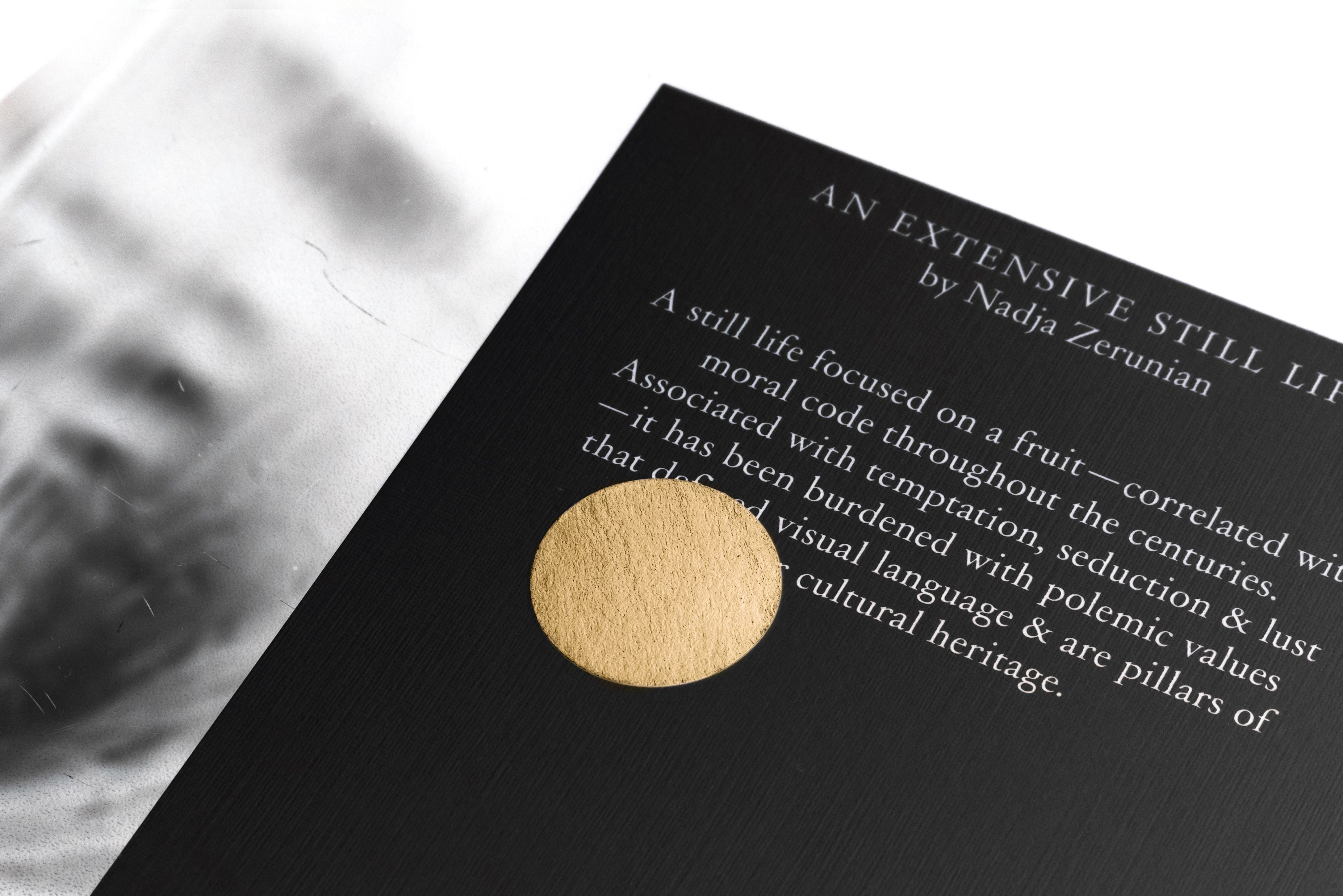
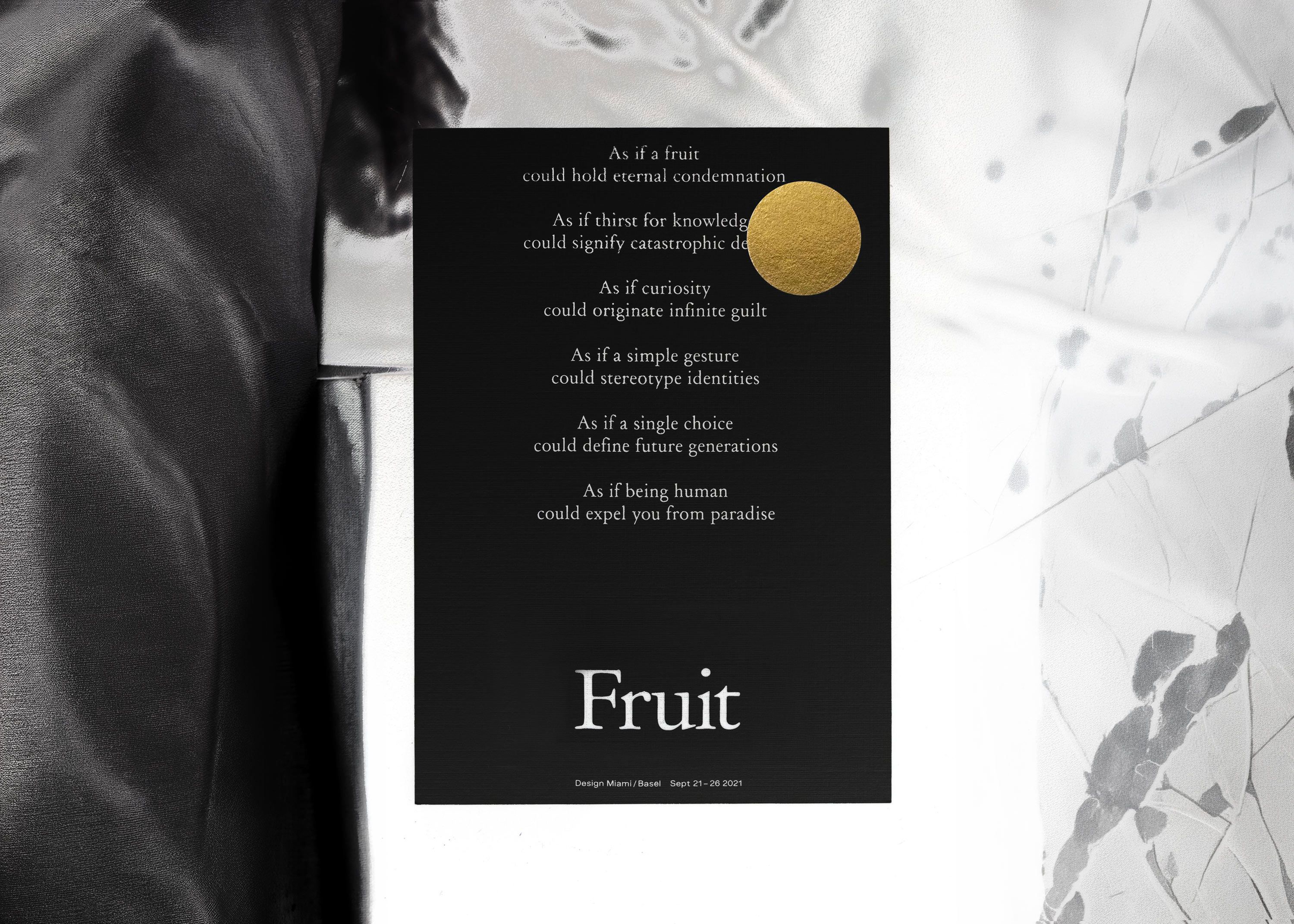
The visual identity references the small, familiar stickers found on fruit. Usually disposable labels indicating origin or variety, they are transformed into precious golden emblems. Applied across a series of postcards, the stickers turn the cards into collectible objects—seductive and valuable, yet marked by the idea of the forbidden. The postcard format allows the exhibition’s imagery to circulate beyond the exhibition space, carrying fragments of its narrative with it.
Together with Daniela Trost’s still-life photography, typography and image evoke the tradition of classical still life while translating it into a contemporary visual language. Rather than simply documenting the objects, the communication extends their stories and the tension between beauty and unease, attraction and prohibition. The project reveals how fruit became a symbol of temptation, knowledge and guilt—and how this centuries-old narrative continues to shape our visual culture today.