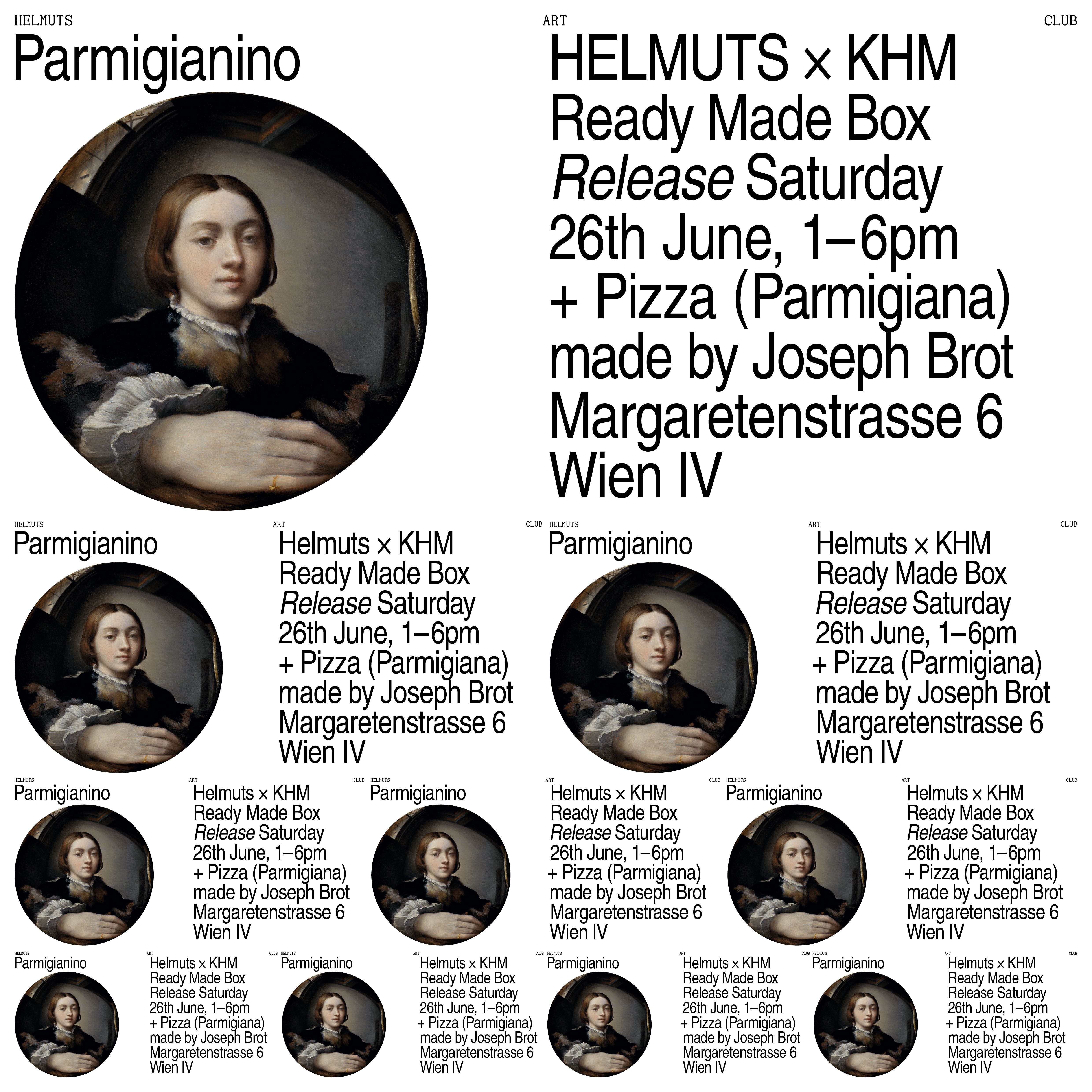
Helmuts Art Club × KHM: Parmigianino is a special edition created in collaboration with Vienna’s Kunsthistorisches Museum. At its centre is Parmigianino’s Self-Portrait in a Convex Mirror, painted around 1523–24. Often described as one of the earliest selfies in art history, the nearly 500-year-old painting shows the young Italian artist looking directly at his own reflection. The curved surface of the mirror distorts the surrounding space and brings his dramatically enlarged hand into the foreground—turning the self-portrait into an extraordinary study of perception, representation and self-presentation.
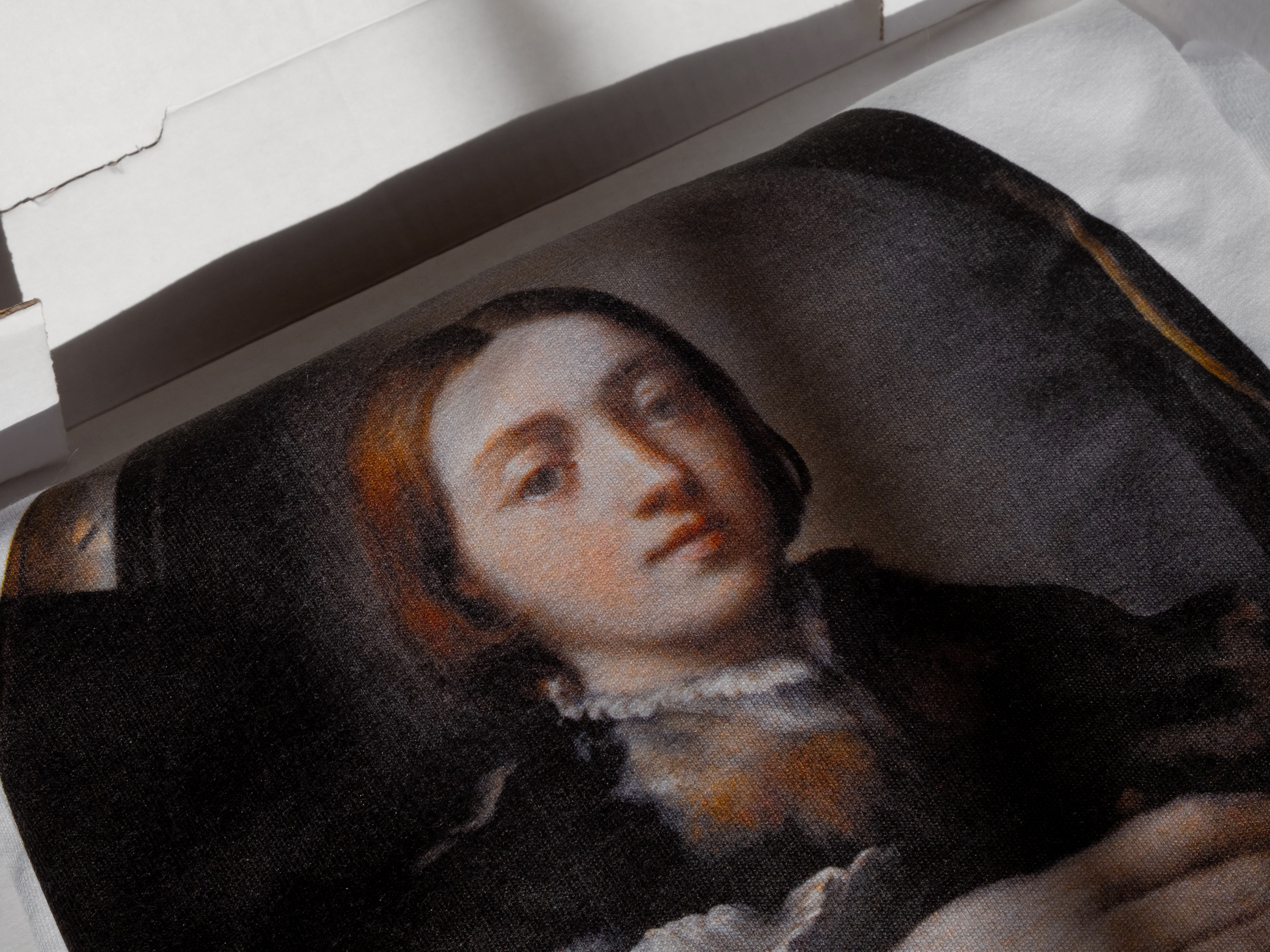
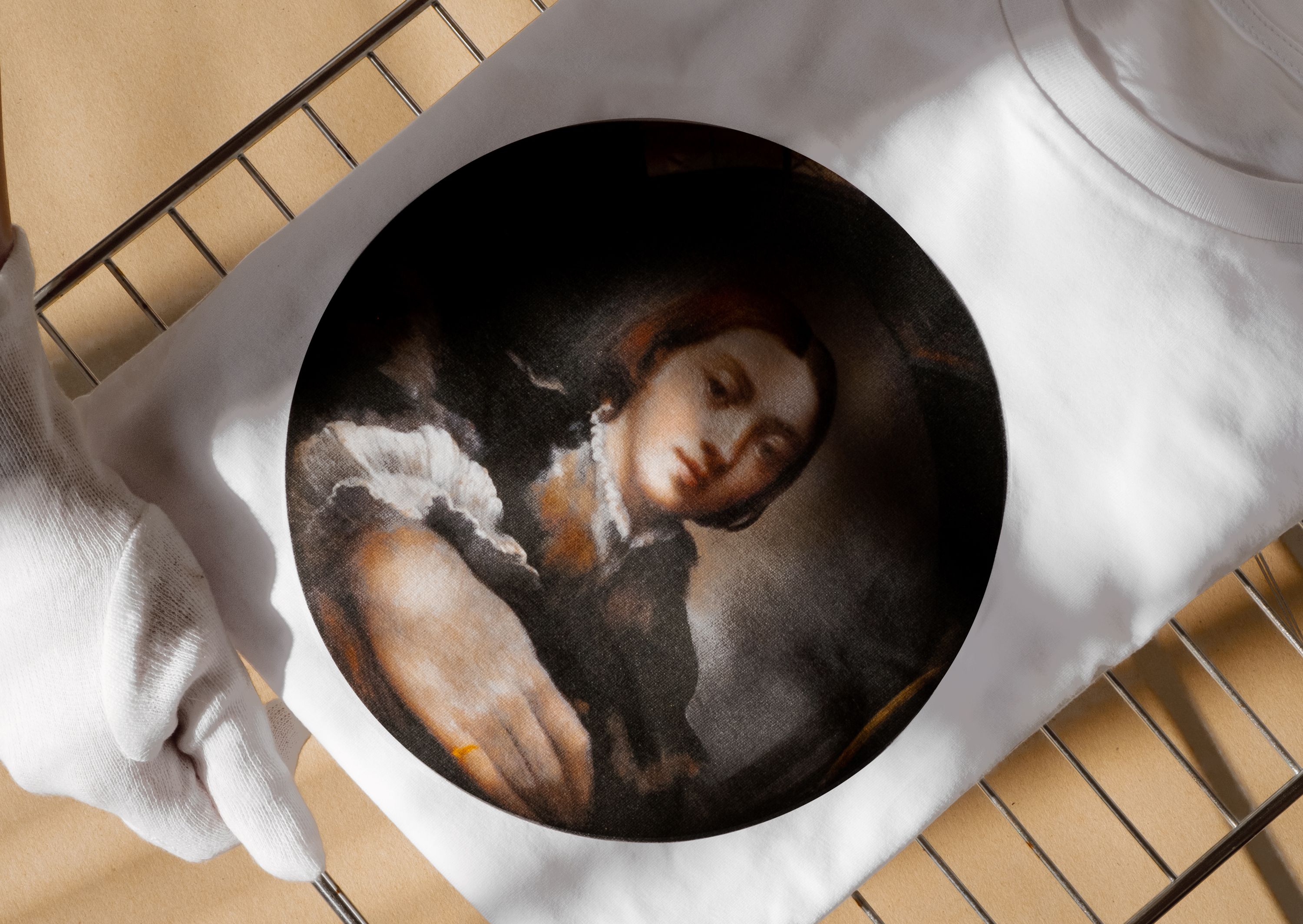
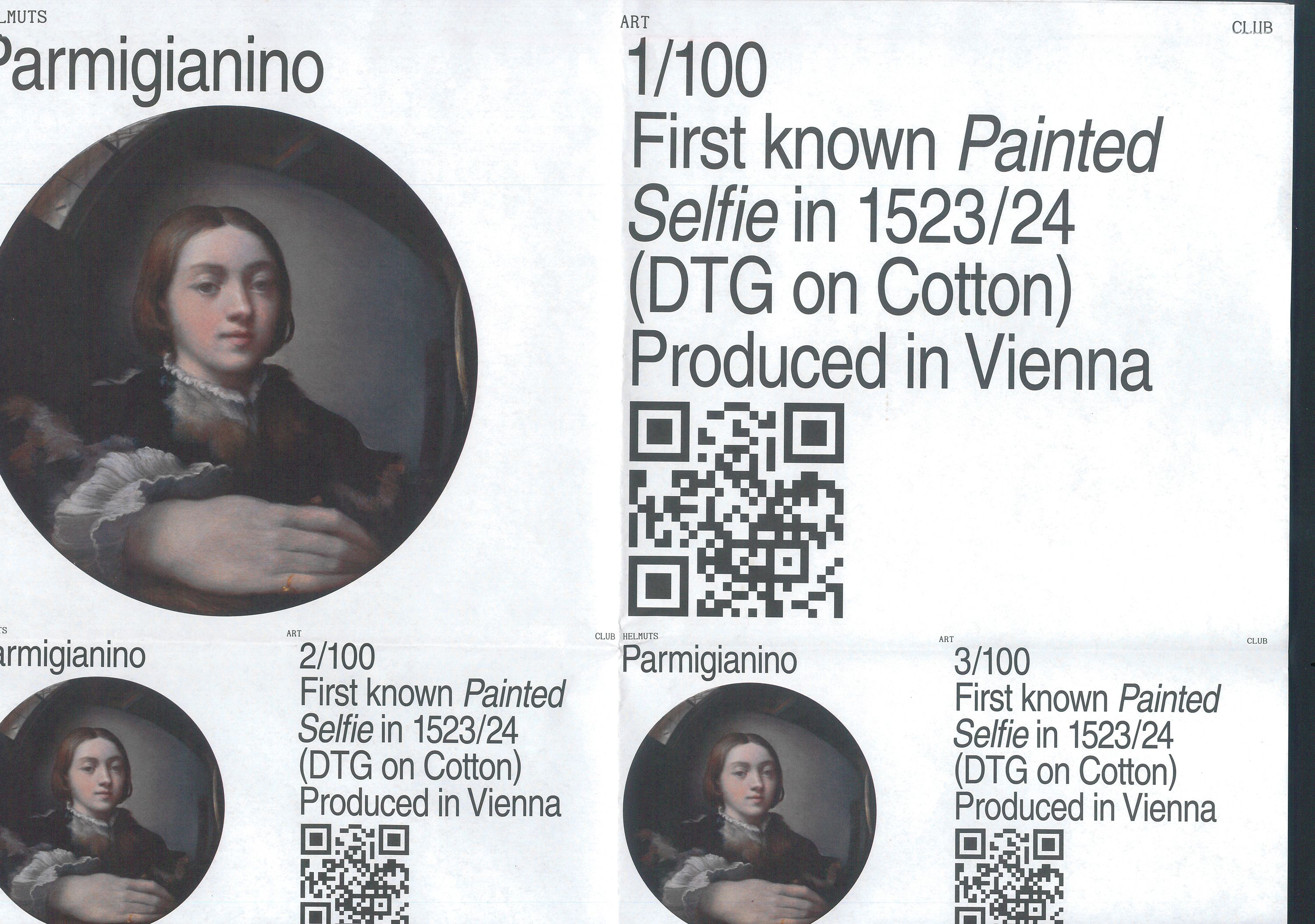
For the limited-edition T-shirt, the historic image was transferred from the museum wall onto an everyday garment. Parmigianino’s portrait appears prominently on the front, while the museum’s description of the painting is printed across the back. Image and information, artwork and institutional context are brought together on the body. The wearer becomes a moving exhibition display, carrying the painting beyond the museum and into public space.
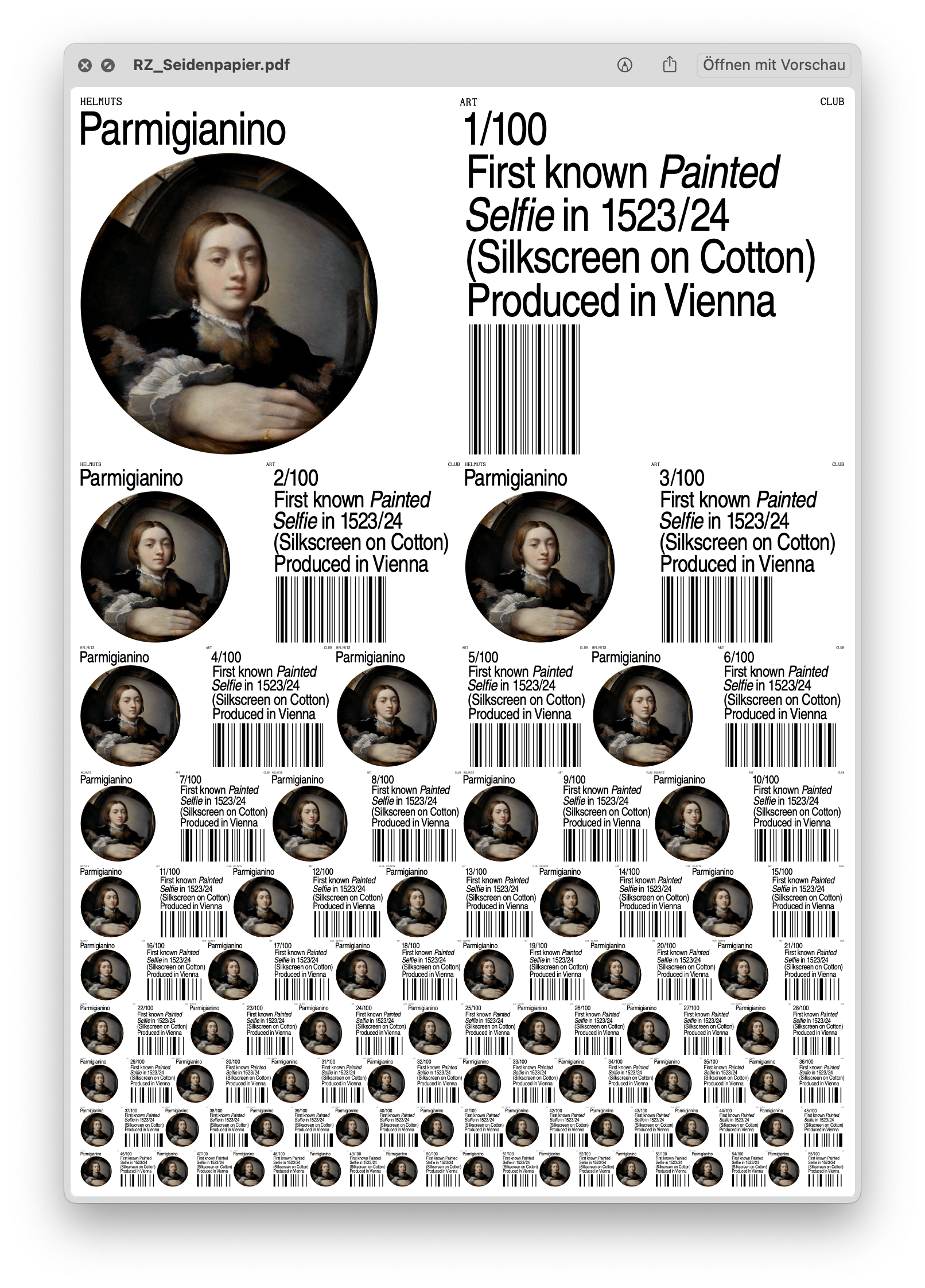
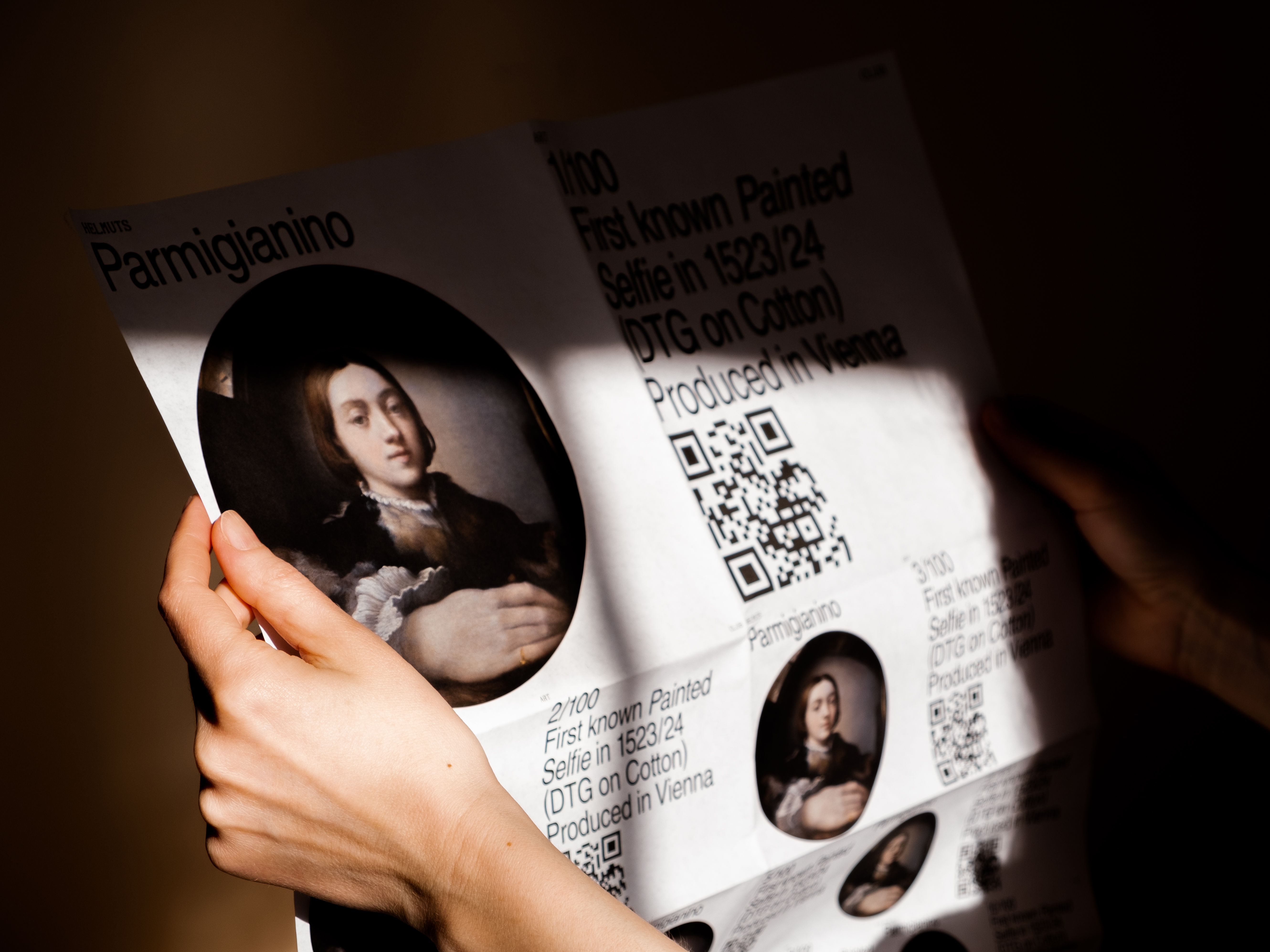
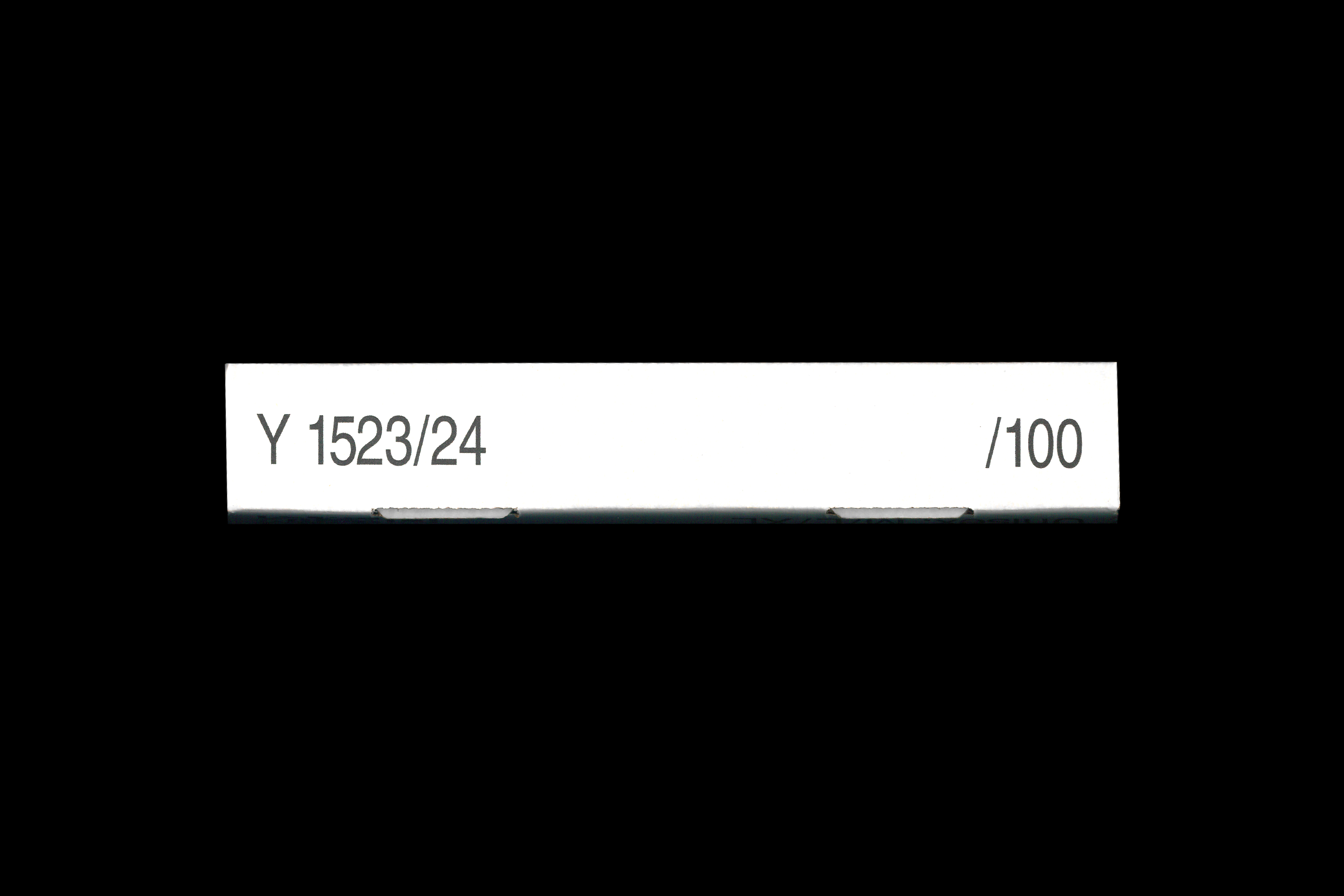
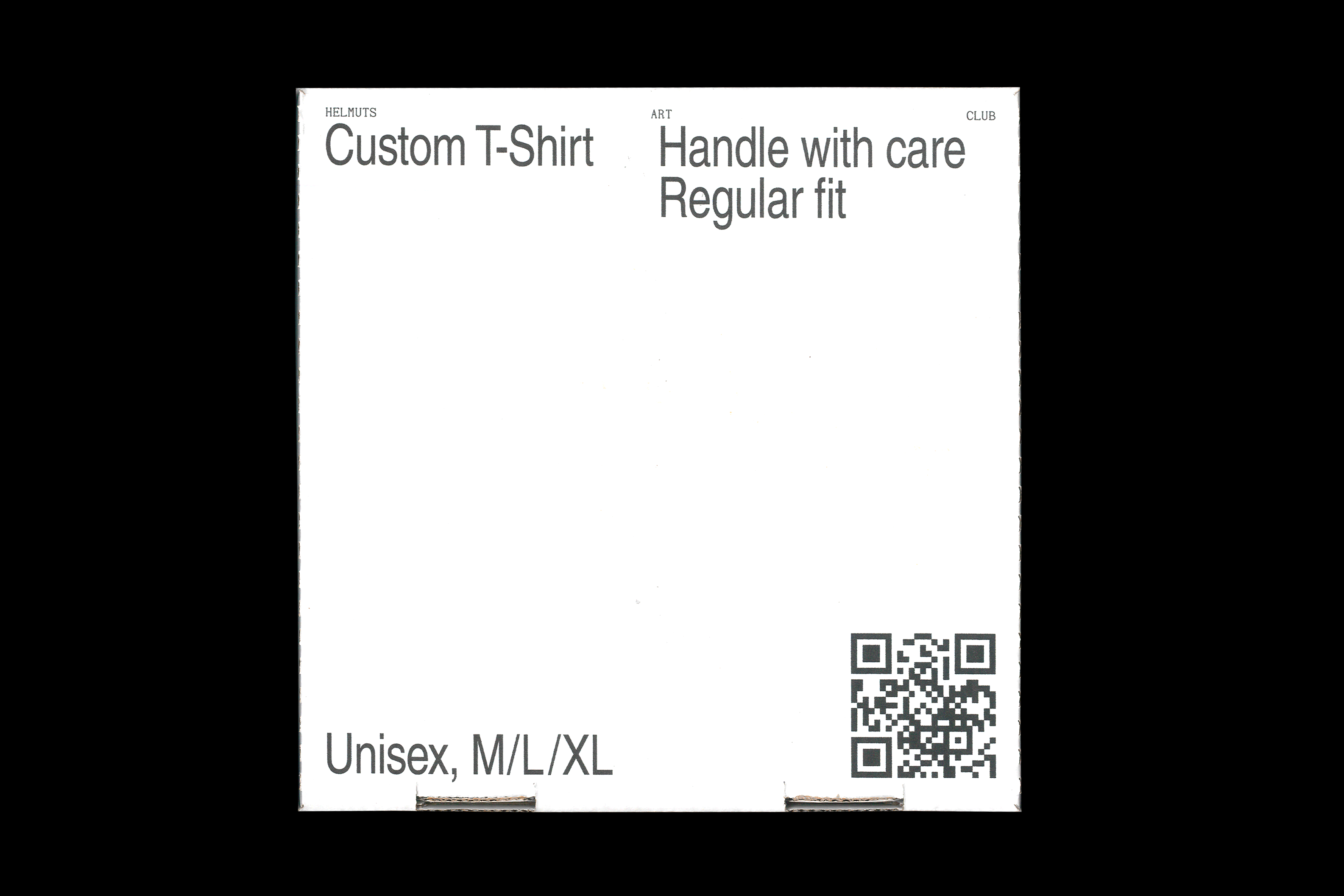
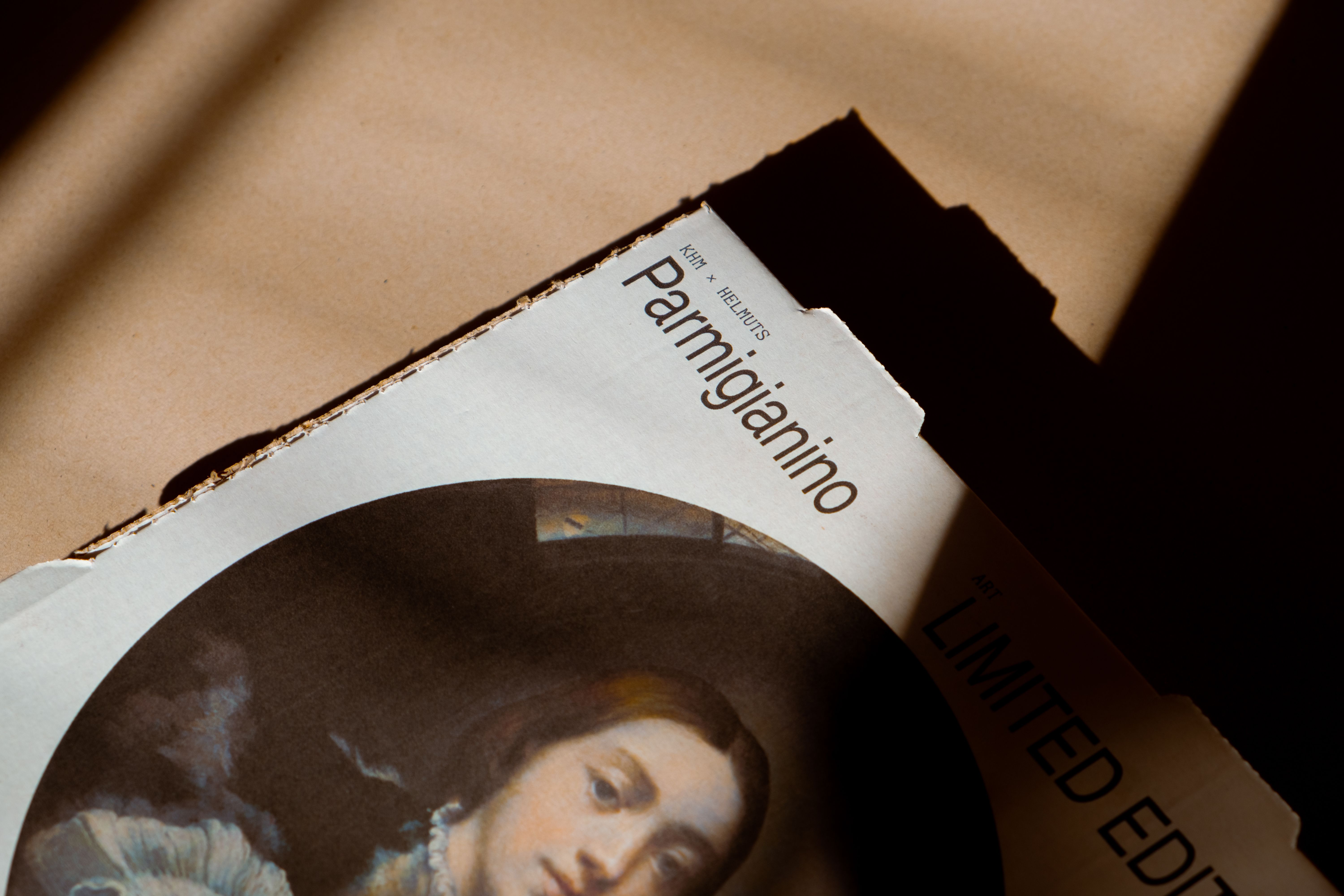
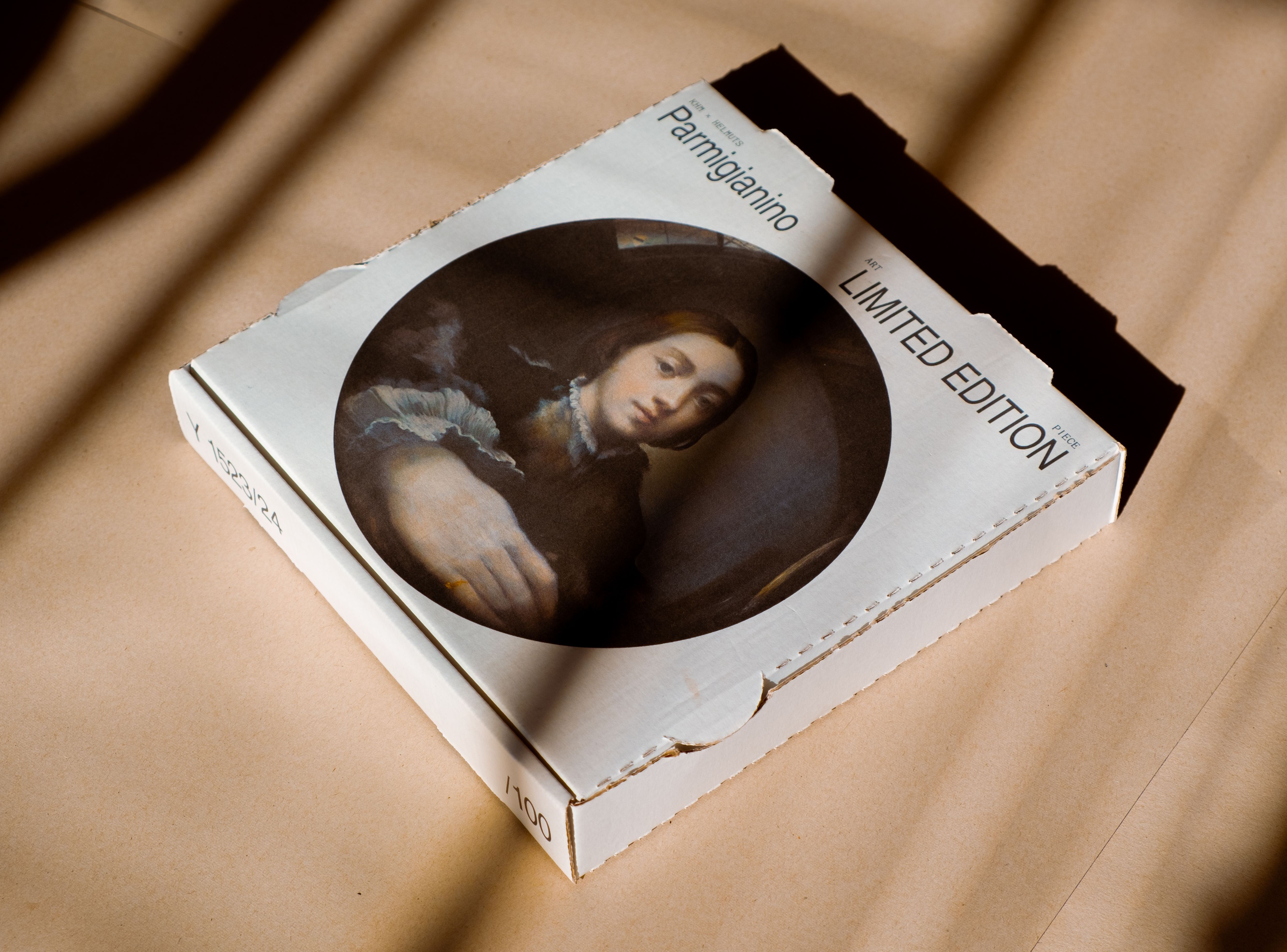
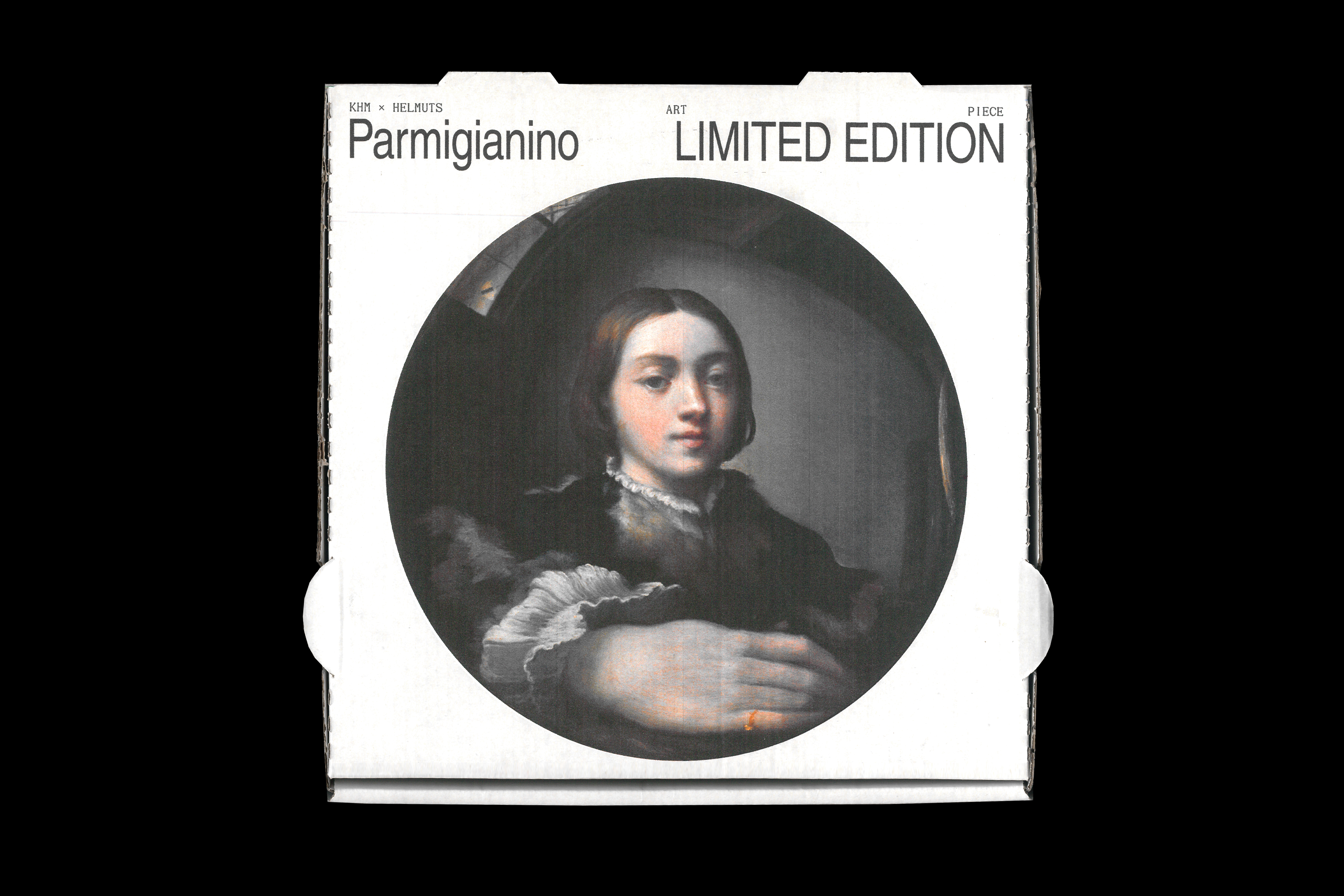
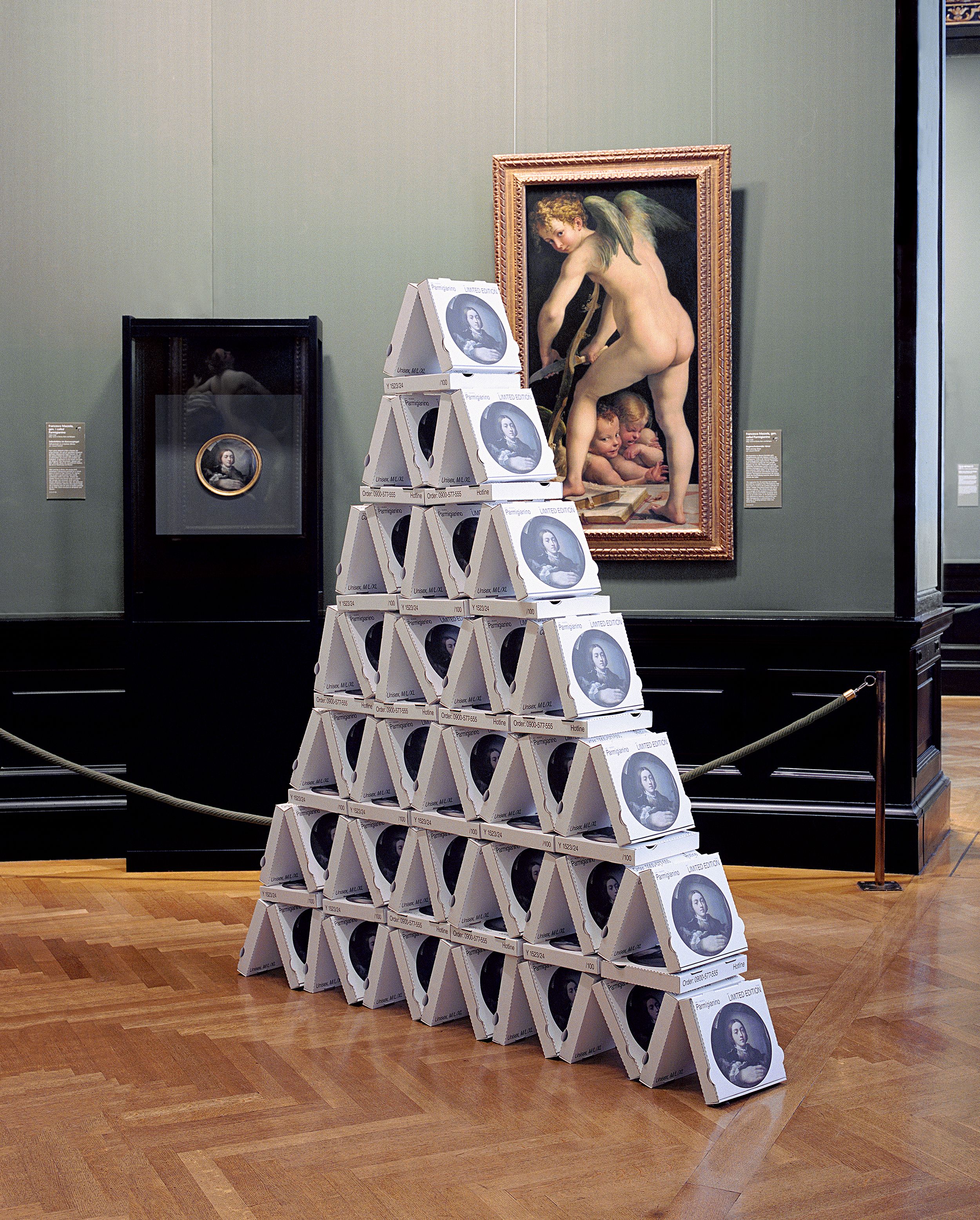
Produced in a limited edition of 100 pieces, each T-shirt was presented inside a specially designed pizza box—a playful reference to Parmigianino’s origins in Parma—and accompanied by white art-handling gloves. For the presentation at the Kunsthistorisches Museum, the boxes were stacked into a large pyramid directly in front of the original self-portrait. Together, they formed a temporary installation within the museum’s collection, placing the reproducible merchandise in direct dialogue with the unique historical artwork.
The installation was photographed by Clemens Fantur. This staging deliberately shifts between the precious and the ordinary, combining the conventions of museum presentation and art handling with the immediacy of streetwear, merchandise and takeaway culture. The pizza box becomes both packaging and display architecture, while the stack of editions turns a commercial object into a sculptural intervention.
The project brings an Old Master into the present without diminishing the strangeness of the original painting. Instead, it reveals how contemporary Parmigianino’s act of self-fashioning still feels today. Nearly five centuries later, his gaze continues to address its audience directly—now not only from the convex surface of the painting, but from a T-shirt worn through the streets.